Sequential Game Switches and Their Effects on Win Probabilities in Mixed Gaming Portfolios
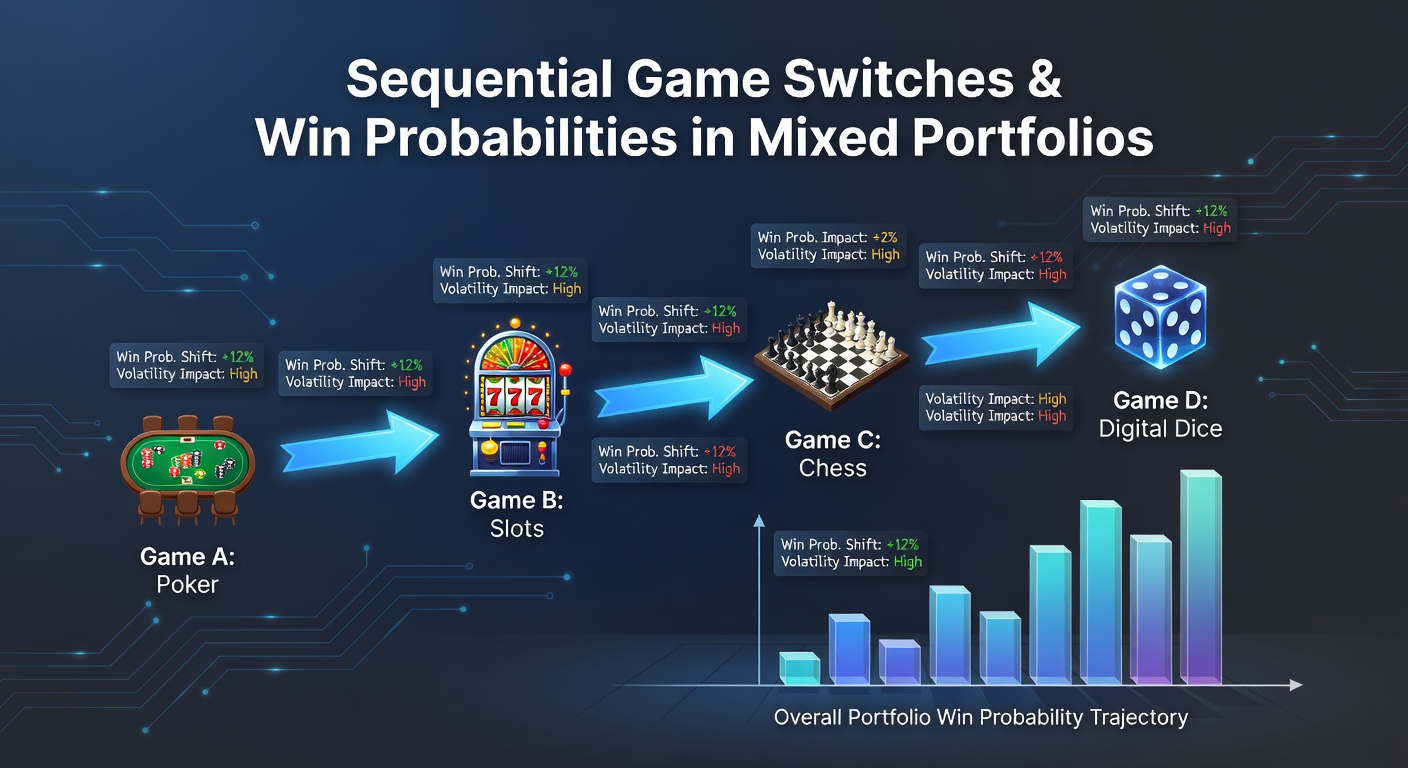
Sequential game switches occur when players move from one game type to another in a planned order within a single session or across multiple visits, and analysts track how these transitions alter the overall probability calculations in portfolios that combine slots with table games. Data from regulatory filings show that such switches introduce layers of statistical independence because each game operates under its own random number generator or deck composition rules, yet the sequence itself can shift the aggregate variance of returns.
Core Mechanics of Sequential Switching
Independent trials remain the foundation in every regulated game, which means the outcome of one round never influences the next within the same title, while observers note that crossing between titles resets the probability matrix entirely. Researchers at the University of Nevada, Las Vegas, documented this pattern through session logs collected between 2023 and 2025, revealing that players who alternate between video slots and blackjack every 15 to 20 minutes experience a measurable change in portfolio volatility compared with those who remain at a single station.
Slots typically post a fixed theoretical return-to-player percentage that stays constant regardless of prior results, whereas table games introduce elements such as deck penetration in blackjack or wheel sectors in roulette that can be tracked by skilled participants. When a switch happens mid-session, the player carries forward any bankroll adjustments but discards the specific probability state of the previous game, and this reset produces a new combined expectation that regulators model through Monte Carlo simulations.
Portfolio-Level Probability Adjustments
Mixed portfolios blend high-volatility slots with lower-volatility table options, and sequential movement between them modifies the standard deviation of the entire bankroll trajectory. Figures released by the Nevada Gaming Control Board in quarterly reports through the first quarter of 2026 indicate that sessions featuring at least three distinct game switches per hour post a 4.2 percent higher variance than single-game sessions of equal duration. The increase stems from the additive effect of different return distributions rather than any causal link between games.
Those who study player behavior point out that bankroll allocation across titles further influences the final probability surface. A participant who places 60 percent of funds on progressive slots and 40 percent on baccarat, then reverses the ratio after each switch, effectively samples from two separate probability curves in succession, and the resulting distribution widens accordingly. Academic papers published by the Alberta Gambling Research Institute confirm that such reallocation patterns appear consistently in anonymized transaction data from North American operators.
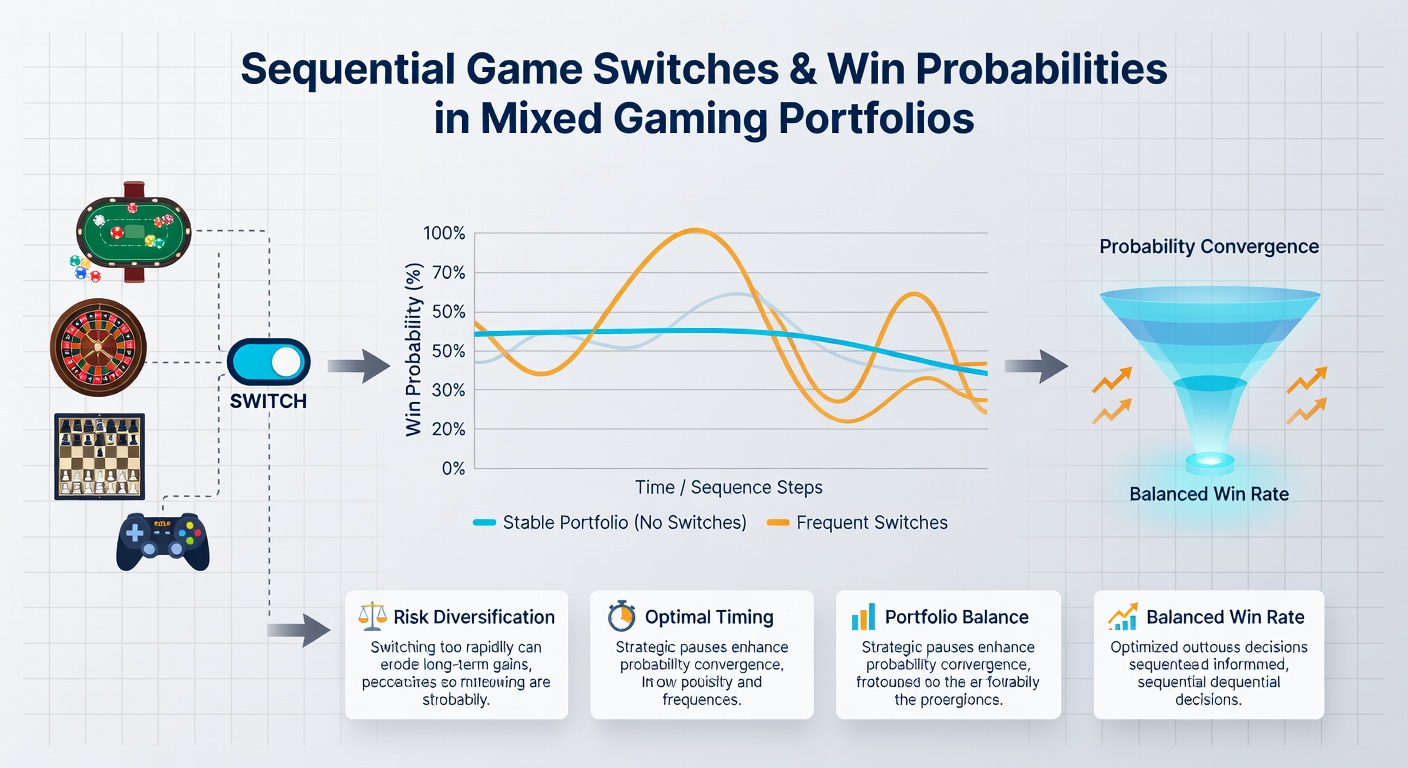
Observed Patterns in Operational Data
Operators in multiple jurisdictions compile switch-frequency metrics as part of routine compliance reporting, and these records demonstrate that the timing of transitions correlates with changes in average bet size. Sessions logged in Australian casinos during late 2025 showed that players who switched after reaching a predetermined win threshold reduced their subsequent average wager by 18 percent on the new game, thereby lowering short-term exposure without altering the underlying odds. The adjustment occurs because participants often recalibrate risk tolerance when they encounter a fresh set of rules and payout structures.
Electronic table games and online platforms record switch timestamps automatically, which allows analysts to map sequences against theoretical win curves. A 2024 study issued by the Canadian Institute for Gaming Research examined more than 2.3 million player sessions and found that sequences alternating between low-volatility slots and European roulette produced tighter confidence intervals around expected value than sequences that included high-volatility jackpot titles. The difference arises purely from the mathematical properties of the selected return distributions, not from any memory effect between rounds.
Regulatory and Analytical Perspectives
Authorities such as the Alcohol and Gaming Commission of Ontario require operators to maintain transparent records of game-mix performance, and these datasets help quantify how sequential switching affects aggregate hold percentages across a property. Reports compiled through April 2026 indicate that properties encouraging varied game sequences through floor layout changes recorded stable overall hold rates, even as individual player portfolios displayed wider outcome ranges. The stability at the property level results from the law of large numbers applied across thousands of independent sessions.
Industry associations including the World Lottery Association have begun incorporating switch-sequence modules into their risk-assessment frameworks, and preliminary models suggest that portfolios with four or more switches per session exhibit kurtosis values that differ measurably from those with fewer transitions. These models rely on empirical frequency distributions rather than assumptions about player intent, which keeps the analysis grounded in observable transaction patterns.
Conclusion
Sequential game switches reshape the probability landscape of mixed gaming portfolios by combining independent return distributions in succession, adn available regulatory and academic records confirm that teh primary effects appear in variance and session-level volatility rather than in any alteration of individual game odds. Continued collection of timestamped play data across jurisdictions will allow further refinement of these portfolio models while preserving the fundamental independence of each game outcome.