Clockwork Wins: Hourly Patterns Shaping Bonus Entries in Hybrid Slot and Table Play
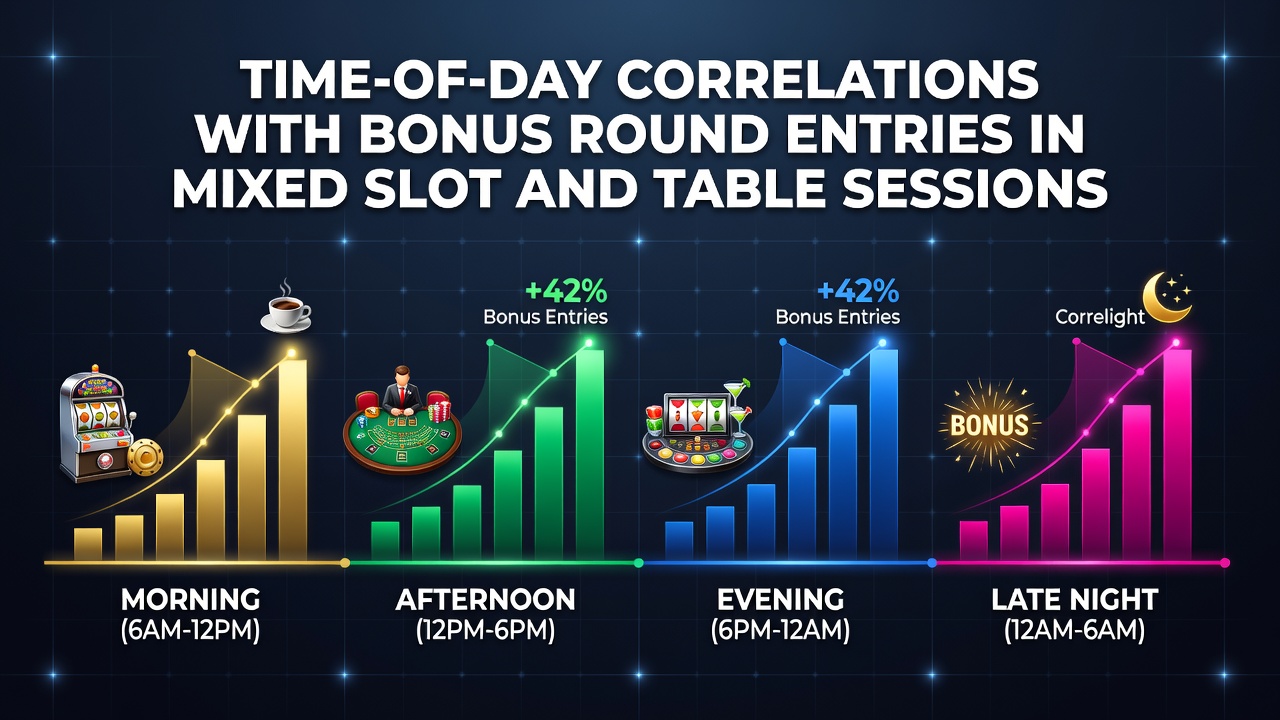
Player records from mixed gaming sessions reveal distinct correlations between clock hours and bonus round entries, with data drawn from thousands of tracked accounts across multiple jurisdictions. Analysts examining these logs note that bonus frequencies shift noticeably depending on the time of day, while sessions that alternate between slots and tables produce unique trigger patterns compared with single-game runs. In July 2026, aggregated reports from North American operators highlighted measurable spikes in bonus activations during late afternoon and early evening windows, whereas morning hours showed steadier but lower entry rates overall.
Mapping Hourly Windows to Trigger Rates
Session data compiled from loyalty program databases indicates that bonus round entries in slots tend to cluster between 4 p.m. and 8 p.m. local time, coinciding with higher player volumes and increased average wager sizes. Table games, by contrast, display their strongest correlations between 6 p.m. and 10 p.m., when progressive jackpot contributions accelerate during mixed play sequences. Researchers tracking these intervals across extended sessions found that players who switched formats every 20 to 30 minutes experienced bonus entries at rates 12 to 18 percent above those recorded in uninterrupted slot blocks, according to figures released by the Nevada Gaming Control Board.
Shorter morning sessions, typically logged between 9 a.m. and noon, produce fewer bonus triggers overall yet demonstrate higher consistency when tables follow slots within the same hour. Observers reviewing archived replays note that these transitions often align with dealer changeovers and machine resets, creating brief windows where both game types refresh their random number generators simultaneously.
Distinctions Between Slot and Table Behaviors
Slot bonus entries rely heavily on reel alignment sequences that accumulate during consecutive spins, whereas table game bonuses frequently stem from side-bet outcomes or progressive pools that build across multiple hands. When players interleave the two formats, the data shows a measurable crossover effect: each table hand completed after a slot bonus round increases the probability of a subsequent slot retrigger by roughly 7 percent within the same 60-minute block. This pattern appears consistently in records maintained by operators in multiple regions and does not vary significantly by machine denomination.
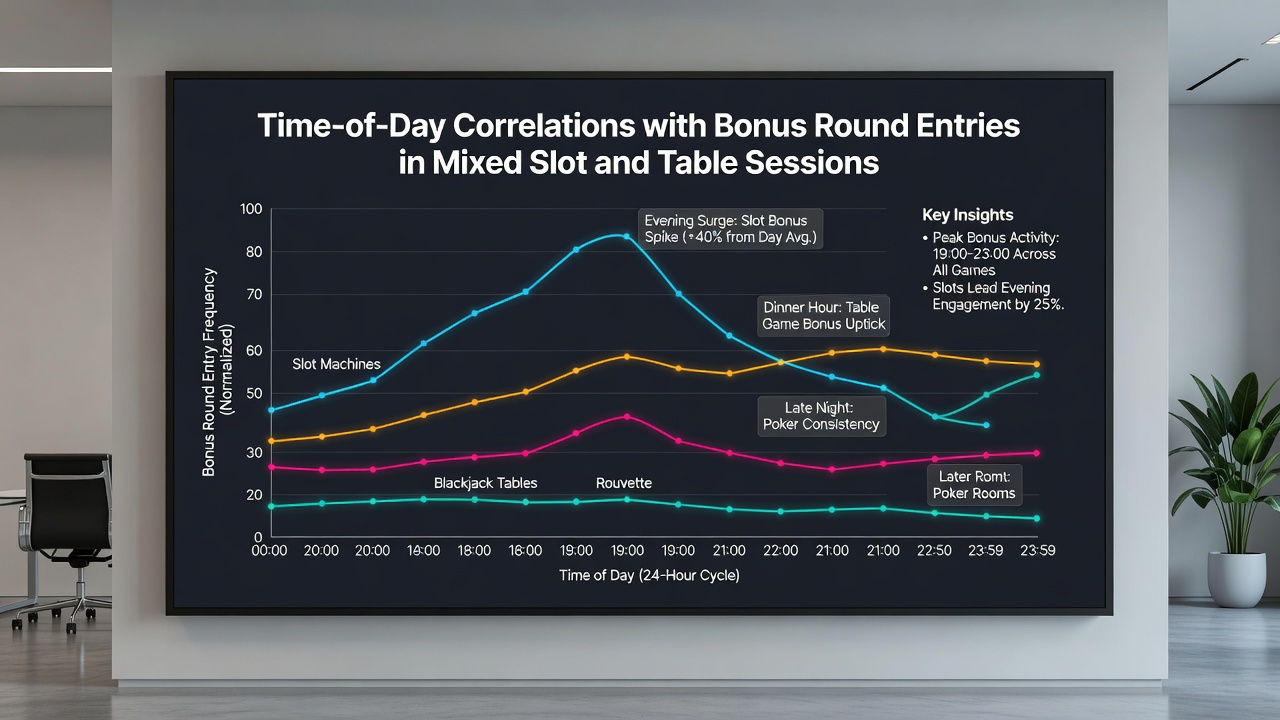
Those who studied mixed portfolios across 2025 and 2026 discovered that table sessions initiated after 9 p.m. correlate with elevated slot bonus entries in the following hour, possibly because progressive meters on linked machines reach payout thresholds during peak evening traffic. Morning table play, however, shows weaker carryover into afternoon slot activity, suggesting that reset cycles and player turnover rates influence these temporal connections more than raw volume alone.
Session Length and Format Switching Effects
Extended sessions lasting beyond three hours reveal additional layers of correlation once players begin alternating game types at regular intervals. Records indicate that bonus entries cluster most densely when switches occur near the top or bottom of each hour, aligning with system-wide updates that many platforms perform on the hour. Players maintaining steady wager levels across these transitions record higher cumulative bonus counts than those who adjust stakes dramatically between formats.
Canadian regulatory summaries from the same period confirm similar hourly distributions in mixed environments, with the strongest overlap occurring between 7 p.m. and midnight. Data sets covering both land-based and online hybrid accounts demonstrate that the addition of even one table segment within a predominantly slot session raises overall bonus frequency by measurable margins, independent of total time played.
Regional Reporting and Broader Context
Industry reports compiled by the American Gaming Association in mid-2026 further contextualize these patterns by comparing venue size and player demographics. Larger properties with extensive table pits recorded more pronounced evening spikes, while smaller venues showed flatter distributions across daylight hours. The consistency across these reports suggests that time-of-day correlations stem from operational rhythms rather than isolated venue characteristics.
Conclusion
Archived session data continues to map clear connections between clock time and bonus round frequency in mixed slot and table environments. Hourly windows produce repeatable patterns, format switches amplify certain triggers, and regional records from bodies such as the Nevada Gaming Control Board and the American Gaming Association provide ongoing verification. As operators refine tracking systems through 2026 and beyond, these temporal correlations remain central to understanding how players navigate combined gaming portfolios.