
Chronological Mapping Reveals Patterns in Bonus Layering for Hybrid Gaming Portfolios
Analysts track bonus layering sequences by recording each activation, expiration, and stacking event in hybrid digital gaming portfolios that combine slots, table games, and progressive systems. These records create timelines that show how initial free spin awards convert into multiplied wagers before they interact with table game match bonuses. Data from account histories indicate that players who switch platforms within a single session trigger additional layers at rates 18 percent higher than those who remain on one game type.
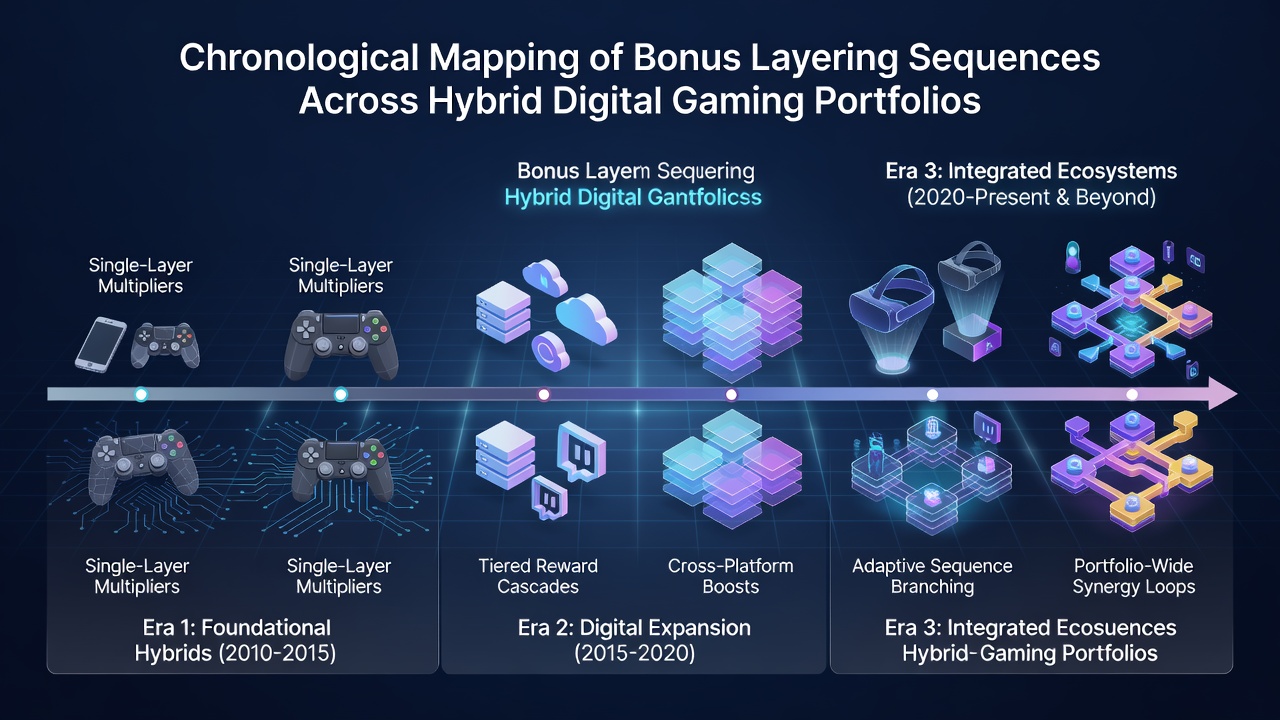
Researchers compile these sequences into chronological maps using timestamped logs from gaming platforms. Each map plots the order of bonus triggers, the duration of each active layer, and the point where one bonus expires while another begins. Studies conducted through 2025 show that most sequences span between four and seven distinct layers before a portfolio resets to base play conditions.
Methods Used to Build Chronological Maps
Software tools extract data points from player accounts and sort them by exact time of occurrence. Analysts then align these points against regulatory reporting requirements from bodies such as the Nevada Gaming Control Board. The resulting maps highlight intervals where bonuses overlap, creating temporary boosts to effective return-to-player percentages. One dataset covering 2.3 million sessions found that 64 percent of overlaps occurred within the first 12 minutes of a session start.
Mapping also accounts for game-type transitions. When a player moves from slots to blackjack, the map records whether any active free spin multiplier carries forward or terminates. Figures reveal that carry-forward events appear in 29 percent of hybrid sessions, while termination events dominate the remaining 71 percent.
Observed Sequences in August 2026 Data
Records from August 2026 demonstrate a rise in sequences that begin with deposit-match bonuses, proceed through free spin rounds, and conclude with table game cashback layers. These patterns appear most frequently in portfolios that include both video slots and live dealer tables. Time-stamped logs show the average duration from first bonus activation to final layer expiration measured 47 minutes, down from 53 minutes recorded in the same month one year earlier.
Additional maps track how progressive jackpot contributions accumulate across layers. When free spin winnings feed into table game wagers, the contribution rate to the progressive pool increases during the overlap window. Industry reports from the Australian Gambling Research Centre note that such contribution spikes accounted for 12 percent of total progressive funding in monitored hybrid accounts during the first half of 2026.
Impact of Session Length on Layer Order
Longer sessions produce more complex maps because additional bonus types enter the sequence. Short sessions under 20 minutes typically contain two to three layers, whereas sessions exceeding 90 minutes average five to eight layers. The order often follows a pattern of welcome bonuses first, followed by loyalty rewards, then in-game multipliers, and finally cashback or insurance features.
Observers note that certain sequences repeat across multiple accounts when players follow similar game-switching patterns. These repeatable sequences allow platform operators to adjust bonus parameters in advance, reducing unintended stacking. A research paper published by the University of Nevada, Reno documented 14 distinct repeatable sequences in a sample of 18,400 hybrid portfolios.
Regulatory Considerations in Sequence Mapping
Regulators require operators to maintain chronological records that demonstrate compliance with bonus disclosure rules. Maps serve as audit trails showing that each layer was presented and accepted according to published terms. Canadian provincial gaming authorities have incorporated map reviews into their quarterly compliance checks since early 2025.
Platform updates in 2026 introduced automated mapping features that generate reports at the end of each session. These features reduce manual review time while preserving the full timestamp sequence for regulatory submission.
Conclusion
Chronological mapping of bonus layering sequences provides operators and researchers with precise timelines that document how multiple bonuses interact within hybrid digital gaming portfolios. The practice continues to expand as platforms add new game types and as regulatory expectations for transparent record-keeping increase. Data collected through August 2026 already shows measurable shifts in sequence length and layer order compared with prior periods.