Chronicle of Clicks: Archived Gameplay Metrics Unveil Timing Factors Behind Sustained Win Sequences in Virtual Gaming Environments

Data from virtual gaming platforms continues to highlight how precise intervals between player clicks correlate with extended win sequences across digital environments, and researchers examining these archived records have identified consistent patterns that span multiple game types. These metrics, drawn from millions of sessions logged over recent years, reveal that timing adjustments in user interactions often precede clusters of successful outcomes rather than random chance alone.
Methods Behind Metric Collection
Virtual gaming operators maintain detailed logs of every interaction, including click timestamps, session durations, and outcome sequences, which allow analysts to reconstruct player behavior with high accuracy. Studies conducted by academic teams at institutions such as the University of Nevada, Reno have parsed these datasets to isolate variables like click frequency and pauses between actions, showing that certain rhythms appear more frequently during prolonged positive result streaks. In July 2026, updates to data aggregation standards across several North American platforms further refined how these records are anonymized and shared with external researchers, enabling broader comparisons across jurisdictions.
Timing Patterns Identified in Records
Analysis of archived clicks demonstrates that intervals ranging from 1.2 to 2.8 seconds between successive actions frequently align with sustained win periods in slot-style virtual games, whereas shorter or more erratic timings tend to precede outcome shifts. Observers note that players who maintain steady pacing often experience extended sequences, and this holds true when controlling for variables such as bet size and game volatility. Data indicates these patterns emerge across both desktop and mobile interfaces, although mobile sessions show slightly compressed timing windows due to touch-based input differences.
Regional Data Comparisons
Records from platforms regulated under the iGaming Ontario framework provide one set of benchmarks, while parallel datasets from European operators offer contrasting insights into how regulatory environments influence record-keeping granularity. When researchers cross-reference these sources, they find that timing factors remain stable even as local rules vary, suggesting the underlying mechanics of player interaction drive the observed sequences more than external policies.
Impact on Game Design and Player Records
Game developers have begun incorporating timing feedback mechanisms into virtual interfaces, adjusting reel speeds or animation delays based on aggregated click data to test effects on sequence length. Archived replays from extended sessions show that participants who adapt their click cadence mid-session achieve longer runs of favorable results compared with those maintaining fixed patterns throughout. This adjustment process appears in records spanning thousands of accounts, where mid-session timing shifts coincide with renewed win clusters after initial plateaus.
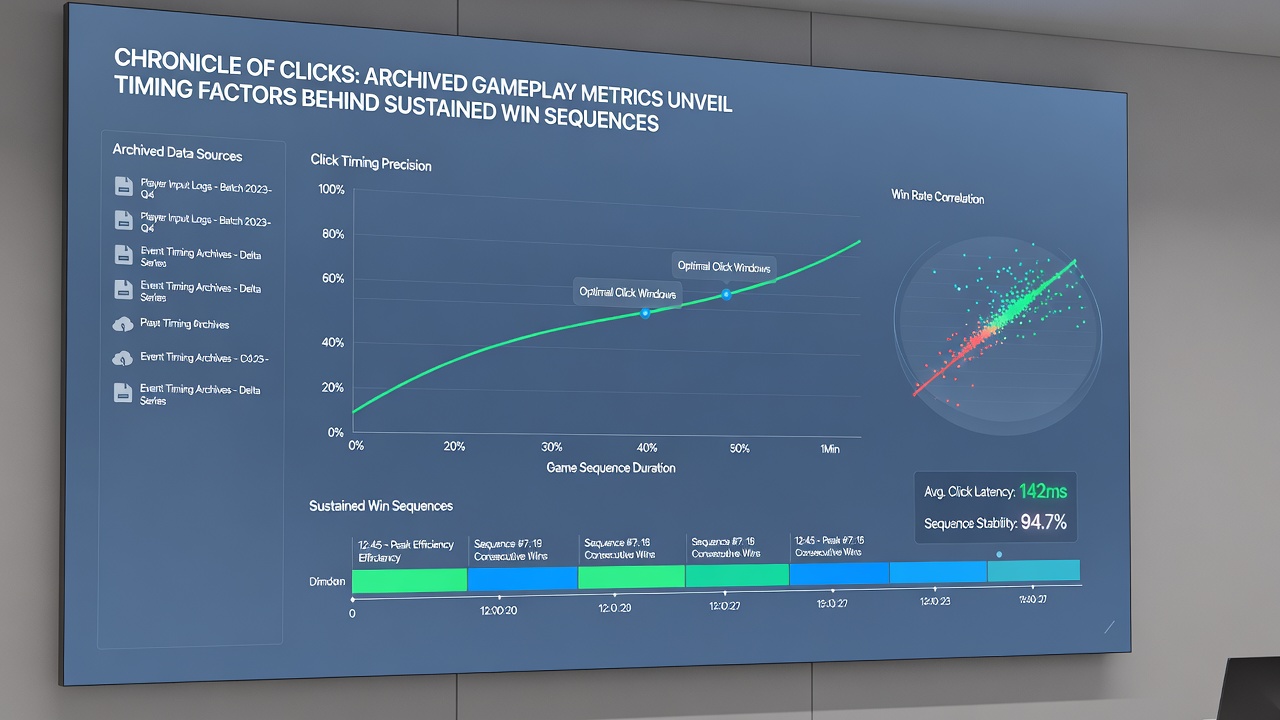
Further examination reveals that external factors, such as time of day or session length, interact with these timing elements. Accounts active during peak evening hours display different optimal intervals than those recorded in early morning periods, and analysts attribute this variation to subtle changes in player attention metrics captured alongside the click logs.
Future Directions for Metric Analysis
Ongoing work by international research consortia continues to expand the scope of these archived studies, incorporating machine learning models trained on historical click sequences to predict potential streak durations. As platforms refine their data retention policies through 2026 and beyond, the granularity of available metrics is expected to increase, allowing for more precise identification of timing thresholds that separate brief wins from extended sequences. Regulatory bodies in multiple regions have signaled support for standardized reporting formats that would facilitate such cross-platform research without compromising user privacy.
Conclusion
Archived gameplay metrics provide concrete evidence that timing factors in player clicks contribute measurably to the length and frequency of win sequences in virtual gaming settings. Continued analysis of these records offers pathways for deeper understanding of interaction dynamics, supported by evolving data standards and collaborative research efforts across jurisdictions.